| Region needs
to reverse negative perceptions to attract investment |
Also high on
the agenda of the economic summit was the issue of debt cancellation where SADC leaders
slammed the Group of Seven (G-7) industrialised states for their approach to debt relief.
The group adopted an initiative to forgive US$65 billion in third world debt and proposed
the sale of 10 million ounces of gold held by the International
Monetary Fund (IMF) to finance the debt relief. The IMF
claims the programme would aid 41 of the world’s poorest countries. But critics argue
its negative impact on bullion prices would be disastrous for many of those same countries
whose economies depend on mining income.
Some of the delegates at the Durban summit argued that G-7
members, among them former colonial powers in Africa had a moral obligation to forgive the
debts of the Highly Indebted Poor Countries.
“The answer is to write it off, selling the gold will create
a new problem. It is within their (G-7) powers to do so without selling the gold,”
said Mbuende.
“For the G-7 to be cautious on debt is criminal. The G-7 can
help, not by preaching but by taking the debt off the books so we can proceed with proper
public and private partnerships,” said South African Minister of Trade and Industry,
Alec Erwin , responding to US Deputy Commerce Secretary Robert Mallet who told delegates
that SADC was moving too slowly on regional trade integration.
Southern Africa hopes to enter the new millennium free from
conflict and the burden of debt has contributed to a slow flow of FDI. SADC is eager to
solve this by widening the region’s market potential by implementing a free-trade
accord and moving towards a harmonised monetary area that would encourage growth.
“We are convinced that all SADC states would have ratified
the SADC Free Trade Protocol in time for implementation by 1 January 2000,” said
Mbeki.
Meeting of SADC Ministers of Finance
and Investment: Communique
Trade intergration on course - Mbuende
From Grand Baie to Maputo: All set for
SADC Summit
Mozambique: SADC's gateway to the
best
All that glitters is not gold
Bulawayo-Beitbridge railway launched |
| by Diana Mavunduse Economic
growth in southern Africa is stalled by negative perceptions about the region and the
continent in general held by international investors.
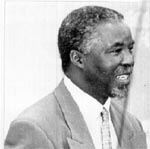
"International investors are unable to shed long-held
perceptions of Africa as a continent with all the negatives attributes, including war and
dictatorships," - Mbeki
President Thabo Mbeki of South Africa told a plenary session on
Responsible Leadership: Trade as an Engine for Regional Integration, at the 9th Southern
Africa Economic Summit of the World Economic Forum held in Durban recently.
“International investors are unable to shed long-held
perceptions of Africa as a continent with all the negative attributes, including wars and
dictatorships,” said Mbeki, attributing it to communication barriers between
international and regional investors.
He urged investors to visit individual southern African countries
for a better assessment of what they are doing in creating an enabling environment for
foreign investment, adding that global perceptions about the continent do not reflect the
reality in specific countries.
SADC, which has the potential to become one of the fastest
emerging markets in the world, has struggled to attract foreign investment crucial to
kick-starting economic growth.
Baroness Linda Chalker, former British Minister of Overseas
Development, said that one of the factors impeding foreign direct investment (FDI) was
lack of clear communication between government and the private sector.
“No foreign direct investment can take place unless local
investment exists,” she said, adding that some international investors felt African
leaders spoke “democracy but do not practice it”. |
“Foreign direct
investment is the only hope for the region, but FDI will only go where there is domestic
investment,” said SADC Executive Secretary, Kaire Mbuende. SADC leaders were urged to speed up the ratification of the SADC Trade
Protocol to enhance regional integration and to work closely together with business and
labour officials.
Zimbabwe’s Minister of Industry and Commerce, Nathan
Shamuyarira, said the political will for regional integration exists although the
community needs to accelerate the process.
“The three-year old trade liberalisation process is
incomplete as five more countries must ratify the trade protocol to put it into
force,” said Shamuyarira.
Under Article 41 of the SADC Trade Protocol, two-thirds of the
member states must ratify the protocol, to enable it to come into force as a basis for
co-operation in the region. Botswana, Mauritius, Namibia, Tanzania and Zimbabwe have
ratified the protocol so far.
Conflict in the region has also exerted a brake on foreign
investment and SADC placed an end to war in the Democratic Republic of Congo (DRC) and
Angola at the top of its priorities.
Weeks of talks over DRC have yielded limited progress on solving
the conflict, which has divided the third largest country on the continent. SADC is
however, optimistic that peace is imminent and that a coalition of peacekeepers would soon
be dispatched.
The region is also threatened by civil war in Angola, where
fighting resumed after an uneasy four-year truce shattered by UNITA (National Union for
the Total Independence of Angola).
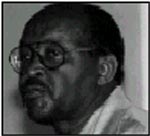
"... the political will for regional intergration exists
although the community needs to accelerate the process," - Zimbabwe's Nathan
Shamuyarira.
|