|
A
s southern Africa has experienced
another devastating
round of floods, questions are
being raised about disaster management
strategies being used and whether they
ought to be overhauled.
Coming hard on the heels of two serious
floods in the past successive seasons
in Botswana, Mozambique, South
Africa, Zambia and Zimbabwe, the current
season has left additional hundreds
of thousands homeless and in need of
food aid and shelter.
For the coming years, many in southern
Africa will require assistance to restock
their food and livestock while rebuilding
their homesteads. This is in a
region where the majority of the population
is already languishing in poverty.
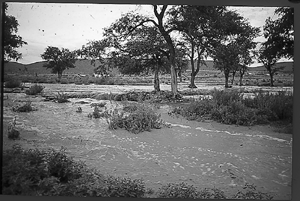
Many rivers burst their banks due to
excessive rains, endangering downstream communities
Complaints have been raised already
that some people ignore early warnings
by civil protection authorities, hoping
to sit out the floods caused by rising
waters resulting from incessant rains in
already waterlogged areas.
In Mozambique’s recent floods, some
peasants refused to relocate to higher
ground from the Zambezi basin when
helicopters were despatched to the area
to evacuate them.
|
Critics, however, attribute this to the
lack of trust by the local people in their
meteorological stations, which have often
been accused of inaccuracies in their
forecasts.
The announcement by the Zimbabwe
meteorological office in early March
that some parts of the country were going
to experience torrential rains, with
possible flooding in a period of 10 days
is one such example. These rains did not
come to the extent that had been
predicted.
However, the issuance of an early
warning was made necessary by the occurrence
of a cyclone in the Mozambique Channel.
Despite a revision of the SADC
Protocol on Shared Watercourse
Systems, rivers have proven to be tricky
in disaster management. Mozambique
has become a victim of its neighbours’
actions. Each time Zambia and Zimbabwe
open the floodgates of the Kariba dam
along the Zambezi River, Mozambique’s
Tete province has suffered as the river
swells and burst its banks causing
flooding. At the start of the season,
weather experts at the Southern Africa
Region Climate Outlook Forum
(SARCOF) in Botswana predicted normal
to above normal rainfall for most parts of
the SADC region for the period October
2000 to March 2001.
True to SARCOF’s prediction, there
was below normal rainfall in northern
Tanzania; above normal rainfall in Angola,
central Zambia, Zimbabwe, South
Africa, central and southern .
|
Mozambique,
much of Botswana and Namibia,
Malawi, Lesotho, Mauritius, Swaziland
and southern Tanzania Following two wet seasons and unprecedented
flooding in the affected
SADC countries, flooding was experienced
again in low-lying areas where the
water tables were still high and soil already
saturated.
The Regional Early Warning Unit predicts
that only Malawi, South Africa and
Zambia will have an overall cereal surplus
during the 2000/2001 marketing year.
The rest of the countries face overall
cereal deficits ranging from 109,000
tonnes in Swaziland to about 1.17 million
tonnes in Tanzania.
Hit by recurrent floods, southern
Africa needs to reorganise its disaster
management and early warning institutions
and mechanisms to effectively deal
with the disasters ravaging the region.
A harmonization of mechanisms by
countries sharing watercourses is necessary
to curb flooding which can be
averted by joint water management.
The need to foster trust in national
weather services is urgent and governments
can best work on it through intensive
public awareness programmes and
community involvement in discussions
on disaster management. Weather services
need to be fully equipped with up to
date technology in order that they give
accurate predictions which will help them
gain the trust of people in the region.
|
