COMMUNITY BUILDING |
culture and sport |
|
Conference to look at role
of culture in regional intergration |
ASADC
inter-ministerial conference on the place and role of culture in the regional integration
agenda is set to run from 27-30 November in Maputo, Mozambique.
The major aim of the conference is to demonstrate that culture is
a cross cutting issue with a critical role in the re-gional integration process and in
eco-nomic growth. It is set to promote and strengthen regional markets for
arts and |
said Matusse.He hoped the meeting would acclimatise the“
different ministers on how culture can be treated in regional integration.
Calls ahead of the conference are that, its high time SADC recognises the
culture sector as a potential and viable business It is therefore imperative for
SADC to forge strong links between governments, the artist and the private
sector |
SADC,” said Stephen Chifunyise a cultural activist and
former permanent secretary in the Zimbabwe ministry of education and culture. There is a
need to evaluate problems and major setbacks that hinder the growth of the cultural
industry within the region.
There are also calls that institutional mechanisms should
be put in place to |
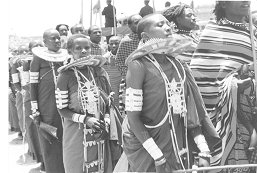 and other important players with the
culture sector for the growth of the cultural industry in the region. The conference will
review a report from a consultant and other important players with the
culture sector for the growth of the cultural industry in the region. The conference will
review a report from a consultant
Culture is such a keyaspect of SAD's community building efforts |
facilitate the growth of the sector and instil a
perception of culture as a viable business industry. “The sector has to promote the
culture industry as a potential business industry capable of employ-ing the youths and
generating income,” said Chifunyise. |
| cultural products. “The conference hopes to bring
together the different players in the industry to assist in the formulation of concrete
and relevant rec-ommendations that will propel the sector to success,” said Renato
Matusse, coordinator of the SADC Culture, Infor-mation and Sport Sector in
Maputo.Ministers of Trade and Finance and Investment will be invited to attend the
conference,” |
who undertook a research on the cultural sector and how it
can reorganise itself. The report analy-ses the role of the different festivals and how
they can become self-sustaining.
“Festivals should be the backbone of the sector’s
expression of the state of the cultural industry in |
The conference will also look at how the region can enhance
its consumption of the different cultural products. There is a need to promote a wider
circulation of the region’s music, plays and books. To this end the meeting will
discuss the cultural industry in light of the SADC Trade Protool
By Jabulani Sithole |
|
Women soccer championships |
Mozambique, SA win medals at
Sydney 2000 |
Women
continue to break gender barriers, venturing into soccer, a sport that was previously
reserved for men. South Africa was host-ing the African women’s soccer championship
in which other seven countries were participating.
The tournament was split into two groups pitting the
Reunion, Uganda, Zimbabwe and the hosts in one group, and Cameroon, Gha-na, Morocco and
Nigeria in the other. Two countries from each group would qualify for the semi finals.
Nigeria are the current holders.
Zimbabwe, one of the two southern African representatives
qualified by beating Namibia and Lesotho, while South Africa qualified by virtue of being
host. The tournament’s top three teams qualify for the world cup to be hosted by
Argentina in 2001. |
Mozambique
and South Africa won SADC’s only medals at the recent 2000 Olympics in Sydney,
Australia.
Maria Mutola of Mozambique, popularly known as Maputo
Express, set the tone when she won Africa’s first gold medal in the women’s 800m
event. The gold medal proved a sweet reward for Mutola (28) who first ran in the Olympics
as a 15-year old in Seoul, Korea in 1988. She finished fifth at Barcelona four years later
and won a bronze medal at the Atlanta games in 1996. During the 1997 World championships
in Athens, Mutola won a bronze medal before scooping a silver medal in Seville in 1999. |
South Africa also managed to get two silver medals and three
bronzes. The first silver medal was won by Hestrie Cloete in the women’s high jump.
The other silver was won by 20-year old Parkin Terence in one of the swimming events. The
bronze medals were won by Herbert LI-wellyn in the 400m hurdles, Kruger Frantz in
men’s discus, and Penny Heyns in a swimming event.
By Mukai Mutandavari

Maria "Maputo express" Mutola |
|
|
