SADC officials at World Exposition 2000 in Hanover, Germany which ended in
October, took the opportunity
of attendance by a wide sector of the potential European market to promote
the region’s diverse tourism.
Thousands of Europeans touring Expo 2000, which ran for
five months, had an opportunity to sample what the region has to offer and SADC countries
showcased their artistry and marketed their tourist destinations.
The participation of SADC at Expo was a joint exhibition
with individual pavilions located around the regional
body’s presentation. This helped to market the region as a single tourist
destination.
Moves are on to exploit the economic potential of tourism in the region.
Last year’s Southern African Investment Dialogue (SAID
99) at Victoria Falls stressed the regional nature of tourism and its importance for
development. This year’s meeting held in Maputo re-affirmed this priority and called
for faster progress towards harmonising visa and other policies in order to encourage
travel. The recent International Herald Tribune’s Southern Af-rican Investment summit
in Wind-hoek also reiterated the need to exploit SADC’s tourism potential. |
The concept of a single regional visa for tourists visiting southern Africa is currently
being explored aimed at boosting tourist arrivals to the region.
“Zimbabwe and its neighbours have outstanding natural
attractions that together make this a unique regional destination. The challenge is to
work concertedly to remove the obstacles to travel
within the region, so that we examine the tourism potential and share its benefits,”
says Herbert Nkala, chairperson of the Environment and Tourism Committee of
The Southern African Initiative of
German Business (also known as SAF-RI) predicts the region will soon enjoy the
world’s strongest growth rates. SA-FRI is convinced that the service sector,
especially tourism, could greatly bolster the region’s economies.
“If a country exports tourist servic-es,
it can make use of its natural compet-itiveness. In an increasingly globalised
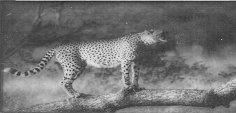

SADC boasts a diverse culture and rich wildlife
world, there are less and less immobile
locational factors which cannot be brought from country A to country B where they can use
B’s much more fa-vourable basic conditions for produc-tion,” says Michael Blank
of Africa As-sociation, a Germany-based organisation working to improve trade relations
between Germany and Africa.
He adds that since SADC countries
have considerable potential for the ex-pansion
of travel and tourism activities in the wildlife and scenic aspects, the tourism industry
will without doubt be one of the growth sectors.
A recent SAFRI report says that in
1999, tourism contributed on average 23 percent to the Gross Domestic Product (GDP) of the
region and catered for 17 percent of employment needs in Mauri-tius, Namibia and
Seychelles. In coun-tries such as |
Lesotho, Malawi and Zambia, the travel and tourism sector con-tributed 5.3 percent to
economic output and 5.2 percent to employment.
Some 1.6 million
new jobs could be created in the travel
and tourism sector in southern Africa by the year 2010, a June 1999 study by the World
Travel and Tourism Council (WTTC) says.
“With its unique
diversity of natural and cultural herit-age, the countries of southern Africa have
enormous
strengths and with the right government action, are set to become key global
tourism players with growing d-mand for adventure tourism, eco-tourism and independent
travel,” says the study.
Political transformation
has benefited the image of the region
as a tourist destination
with the development of large scale cooperative projects such as transnational wildlife
reserves.
The increasing liberalisation of air transport and the
development of inter-national harbours is now allowing direct access to more destinations
throughout SADC.
However, there is still need for invest-ment in
infrastructure in many areas, particularly in key countries such as Angola and Mozambique.
By Tinashe Madava |
