|
Results
of Zimbabwe’s fifth parliamentary elections held 24-25 June
generally reflect the will of the people, according to observer
missions from the SADC Parliamentary Forum and Electoral Commissions
Forum, as well as the Organization of African Unity (OAU).
The SADC
Parliamentary Forum said in a post-election press briefing that the
large voter turn-out and the acceptance of the results by political
parties, indicated the outcome was representative of the electorate’s
wishes. The ruling Zimbabwe African National Union-Patriotic Front (ZANU
- PF) secured a narrow victory over the new Movement for
Democratic Change (MDC) in the 120-member Parliament. ZANU-PF won 62
seats, MDC 57 and ZANU, a small regionally-based party, one.
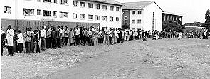
Voters queued for long
periods with calm and patience outside residences in Harare's
high-density suburbs for Zimbabwe's fifth parliamentary election which
gave ruling ZANU-PF a narrow victory.
The
Parliamentary Forum, a regional body whose membership includes
parliamentary structures in 12 southern African countries,
representing 1,800 MPs, noted in its conclusions that the people
"turned out in large numbers to vote and elect leaders of their
choice.
"This is also evidenced by the fact that by and large all
the stakeholders have accepted the results of the election," said
Nora Schimming-Chase of Namibia, head of the Forum’s observer
mission.
The Electoral Commissions Forum of SADC countries echoed this
position, saying despite pre-election violence that claimed about 30
lives, the voting process and the results "are legitimate and
reflect the will of the people".
But both organisations stressed
the need for Zimbabwe to set up an independent electoral commission. to
improve confidence in the electoral process.
|
The parliamentarians made
recommendations to Zimbabwean authorities on the need for an
independent body, a practice that an increasing number of SADC
countries is embracing.
Mostly, the Registrar-General, a civil
servant, ran Zimbabwe’s elections, but the Elections
Directorate and the Electoral Supervisory Commissions were as-signed
roles.
The Forum said while voting proceeded in a "smooth and
peaceful manner", the high incidence of pre-election violence
"imposed limitations" on political parties to campaign
freely.
Flanked by Forum Secretary-General Dr Kasuka Mutukwa and three
members of the observer mission, Schimming-Chase said the mission
deplored the violence that characterised the pre-election phase and
called for a culture of tolerance.
There should be no room for
violence in the political processes in the SADC region. The SADC
Parliamentary Forum calls upon all the political leaders in the region
to ensure that violence does not occur before, during and after
elections," she said.
The mission found the public and private
media too polarised to play a significant role in voter
education and noted the restrictions on political advertising on
public broadcasting.
There was lack of communication between the
electoral authorities and the electorate regarding the process which
resulted in a large number of bona-fide voters not being
able to participate in the poll. The mission added, however, that the
counting process, though slow and tedious, was transparent and polling
staff was professional.
The Electoral Commissions Forum, an
association of regional electoral management bodies,
acknowledged the "high levels of violence"
before the polls and that the situation improved with the arrival of
international observers.
|
The
elections were well conducted but took note of the problems present-
ed by the voters’ roll, from which several thousands of potential
voters names were left out.
"The omissions, however regrettable, do not seem to
have fundamentally affected or undermined the electoral process and
the election results," said the Electoral Commissions
Forum.
The Electoral Forum recommended to Zimbabwe’s
government and electoral authorities, the development of a code of
conduct for all stakeholders, the avoidance of last minute changes to
the electoral regulations and establishment of clear procedures for
the accreditation of domestic monitors and international observers
early in the process.
The Parliamentary Forum stressed that it had an
"obligation of empowering the region with the capacity to deal
with issues pertaining to electoral systems and processes - so that
standards are not set by others".
Speaking to the nation on state television, Zimbabwe’s
President Robert Mugabe said the results of the parliamentary
elections should "bind us all together, loser and winner
alike".
He pledged to work with the new parliament in which there will
be the largest opposition in the country’s history from among
120 elected members.
There will be 20 non-constituency members in the
150-seat Parliament, made up of eight provincial governors and 12 MPs
nominated by the president. Ten other members are chosen from the
Council of Chiefs.
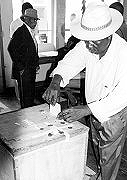
Voting in Zimbabwe
|
