|
More
than 10,000 women and men from all walks of life con-verged on New York
for the Be-ijing Plus Five review process whose theme was "Women
2000: Gender Equal-ity, Development and Peace for the 21 st
Century."
The 23 rd Special Session of the UN General
Assembly gave an ideal opportunity to
assess how far countries have gone towards fulfilling their promises,
especially those made at Beijing in 1995. The special session in June
also sought to address shortcomings, face new challenges and reaffirm
commitments since Beijing 1995.
"Women are bringing their unique concerns to the
attention of their governments for action. These concerns include
domestic violence, lack of access to
land and property, unequal pay for work
of equal value and negative portrayal
of their roles in society," said
Theo-Ben Gurirab, president of the
UN General Assembly, who is also
Namibian Minister of Foreign
Affairs.
Five years ago at the UN Fourth World Conference
on Women held in Beijing, 189
governments including all those from southern
Africa, committed themselves to
advancing the goals of equality, development and
peace for all women around the world
by adopting the Beijing Platform
for Action (PFA).
The PFA calls upon governments to take
action in 12 critical areas of concern identified
as barriers to women empowerment: women
and poverty; women and education;
women and health; violence against
women; women and armed conflict; women and the
economy; women in power and decision-making; institutional mechanisms
for the advancement of
women; human rights of women; women
and media; women and the environment; and
the girl-child.
|
SADC heads
of state and government have
since shown their commitment to the PFA by signing of the Gender and
Development Declaration (1997) and its Addendum on the Prevention and Eradication
of Violence against Women and Children in 1998. These have become the yardstick by which women in the region
continue to measure change.
"A large number of SADC member states have taken the conclusions and
experiences of the 1995 Fourth World Conference on Women to heart and are
applying them in formulating national programmes and progressive
legisla-tion," said Indira Thacoor Sidaya, chair-person of the SADC Committee of
Gender/ Women’s Affairs Ministers, addressing delegates during the special session.
Thacoor is also Mauritian minister responsible for women, family welfare and
child development.
Instruments have been put in place to track and monitor developments. The
SADC Gender Plan of Action of 1997 spells out the terms of reference and roles for the
different players to avoid duplication and overlap and ensure that they complement
each other.
Progress has indeed been made in the regional plan of action.
There is an increase in the number of women Members of Parliament and cabinet ministers in Botswana,
Malawi, Mozambique, Namibia and South Africa, reflected following
national elections in 1999, although the increases have been marginal in some of the
countries. SADC boosts a regional average of 17.9 percent women in
parliament, which is higher than the continental and global averages at 11 and 13.4
percent respectively.
|
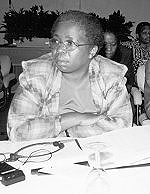
South Africa's Dr Nkosazana Zuma - the only women
Foreign Affairs Minister in SADC
Major challenges remain issues of poverty, HIV/AIDS,
women’s human and legal rights. While almost all SADC countries have
ratified the Convention on the Elimination of all forms of
Discrimination Against Women (CEDAW), laws that affect women directly
such as the customary law remain incompatible.
After exhaustive negotiations at the General
Assembly, delegates reached the much awaited agreement on an outcome
document that will accelerate international efforts towards achieving
women’s equality and advancement.
The document calls for national laws to eradicate
such traditional practices as forced marriages and so-called "honour
killings" of women considered by their families and communities to
have committed acts that dishonoured their name.
The document calls on national governments to set
2005 for the elimination of gender gap in primary and secondary
education.
African NGOs expressed concerns that their issues
such as education, the girl-child and AIDS, also mentioned as critical
areas in the PFA, are still given little commitment by
governments.
"There is need for clear political commitments
by our governments, so that we move to action," said Amelia Zambeze
an NGO delegate from Mozambique.
|
|
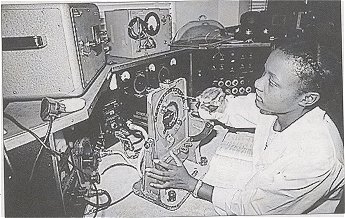
BREAKING NEW GROUND: Susan Gandanzara, the first
black woman aircraft engineer in Zimbabwe
|
The conference also made
progress by calling for tougher measures to com-bat domestic violence,
trafficking in women, tackling HIV/AIDS head on and globalisation.
The general assembly came to a realisation that
"not only do women belong on this planet, but that the future of
the planet depends on women," said UN Secretary General, Koffi
Annan. |
