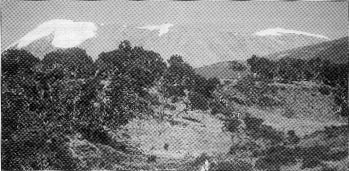
Mt. Kilimanjaro in Tanzania. |
The tourism
sector is one of the fastest growing sectors in southern Africa and is one of the leading
foreign currency earners for countries in the region. In
recognition of the SADC’s potential in the tourism industry, Lipman said at a tourism
conference; “What is needed now is a determined initiative and a clear policy
framework to get this strategy on the cabinet tables of governments concerned.”
Southern Africa is host to some of the world’s most beautiful
tourist attractions which include the Victoria Falls and Great Zimbabwe in Zimbabwe, as
well as vast tracts of game parks with different species of animals in South Africa’s
Kruger National Park, and the Okavango Delta in Botswana.
Meanwhile, the World Conference on the measurement of the economic
impact of tourism, which was held in France recently, recommended the development of
Tourism Satellite Accounts (TSA). The TSAs would enable the tourism sector to monitor its
statistics more efficiently thus paving the way for strategic improvements to help draw in
more profits.
As the SADC Heads of State and Government meet in Maputo, the idea
of speedy ratification and implementation of the SADC Protocol on the Development of
Tourism could be one of the major talking points that could bring the region’s
economy to heal.
The changing face of beauty pageants
Children use art to condemn
violence
More SADC states go to polls
OAU seeks home-grown solutions
Water hyacinth cleared from Lake
Kariba
Old Mutual completes
demutualisation |
| by Tinashe Madava The
ratification of the SADC Protocol on the Development of Tourism, which was signed last
year has become a major topic of discussion in the tourism sector as entrepreneurs in
southern Africa are already thinking of the benefits they stand to gain from marketing the
region as one tourist destination.
Meeting in Windhoek, Namibia recently, SADC ministers responsible
for tourism agreed to ratify the Tourism Protocol in a move set to improve cooperation
between member states in promoting development of the sector in the region.
The Tourism Protocol seeks to “aggressively promote the
region as a single but multifaceted tourism destination, capitalising on its common
strengths and highlighting individual member states’ unique tourist
attractions”. It therefore seeks to lure European and American tourists to come and
spend their money here. This could see countries in the region improving their foreign
currency reserves.
Although the target countries are mainly from outside SADC, the
protocol also encourages visitors from the region.
The protocol also pledges to “give priority to investment in
the sustainable development of natural and cultural resources that transcend territorial
boundaries.” |
After the launch of the
Blue Train II which will service Botswana, Namibia South Africa and Zimbabwe, President
Festus Mogae of Botswana said that the train service is an investment which is in line
with the objectives of the Regional Tourism Organisation of Southern Africa and the SADC
Tourism Protocol. The implementation of the tourism protocol
could result in the creation of jobs in the region, a welcome development in a
subcontinent plagued by plummeting unemployment levels.
At the Windhoek meeting, the SADC ministers also signed an
agreement with the World Trade Organisation (WTO), providing for cooperation between the
two organisations in various areas of tourism. Participants also agreed that there was
need to increase SADC’s market share of the global tourism business.
As the World Travel and Tourism
Council (WTTC) president Geoffrey Lipman pointed out last year, the travel and tourism
sector could create about seven million new jobs in Africa by 2010 of which five million
would be in southern Africa. |