| SADC | gender | |
| SADC takes steps to empower women: Gender unit established at secretariat | ||
|
Since adopting the gender and development declaration a year ago, SADC has taken steps toward mainstreaming gender in its various programmes and activities including the recent establishment of the Gender Unit at the Secretariat in Botswana.
Two senior officers presently staff the unit. The main function of the unit is to advise the executive secretary on gender issues, and work with other officers in the SADC Secretariat to ensure that a gender perspective permeates the entire SADC Programme of Action and Community Building Initiative. The process of putting into place a policy and institutional framework for gender in SADC can be traced to 1990, when the SADC Council of Ministers mandated the SADC Secretariat to explore best ways to incorporate gender issues in the SADC Programme of Work. Since then, a number of important milestones leading to the establishment of the Gender Unit have taken place. At its meeting in Maseru in August 1996, council noted the report of the conference on Social Development in the SADC Region and approved that gender issues at the regional level should be co-ordinated by the secretariat. During preparations for the Fourth UN World Conference on Women held in Beijing in 1995, women from National Machineries, NGOs and other stakeholders in gender in SADC member states consolidated their networks. Following the conference, they established a Regional Advisory Committee and its executive body, the Senior Management Committee. The Advisory Committee is composed of two representatives from each member state, one from Government and the other from the NGO sector. The Management Committee consists of three member states, with one as the focal point. At their meeting held in Windhoek in February 1997, the SADC Council of Ministers approved the establishment of a policy framework for mainstreaming gender in all SADC activities, and for strengthening efforts by member countries to achieve gender equality. |

Dr Athalia Molokommme, Senior Programme Officer. In addition, council approved an institutional framework for advancing gender equality consistent with that established for other areas of cooperation, but which ensures that gender is routinely taken into account in all sectors. The institutional framework has four components. First, a Standing Committee of Ministers responsible for Gender Affairs in the region is established. Secondly, it adopts the existing Advisory Committee, which consist of one government and one NGO representative from each SADC member state, whose task is to advise the Standing Committee of Ministers, and other Sectoral Committees of Ministers on gender issues. Thirdly, Gender Focal Points at sectoral level are established whose task would be to ensure that gender is taken into account in all sectoral initiatives, and is placed on the agenda of ministerial meetings. Finally the framework establishes a Gender Unit in the SADC Secretariat consisting of two senior officers. Significant progress has been made since the institutional framework was formally adopted. SADC Ministers responsible for Gender Affairs held their annual meetings in 1997 and 1998. The following significant developments have also taken place. |
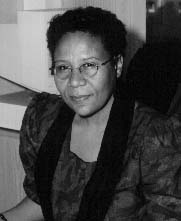
Ms Elizabeth Khayas, Programme Officer. The Addendum on the Prevention of violence against Women In implementing the commitments in the 1997 Declaration on Gender and Development, SADC leaders signed an Addendum to it entitled 'The Prevention and Eradication of Violence against Women and Children'. This addendum, which was signed on 14 September 1998, contains the following major elements:
The Plan was approved by the SADC Ministers Responsible for Gender/Women's Affairs and the Council of Ministers in July and September 1998 respectively. The overall goal of the plan is to provide the tools for the achievement of gender equality through the empowerment of women in SADC region, and the mainstreaming of gender into the SADC Programme of Action and Community Building Initiative. The principal objectives of the plan are to:
|