| SADC | summit | |
|
The chairman of the Summit, his Excellency President Mandela, who delivered the official opening statement, expressed satisfaction over the significantly improved overall macro-economic situation in the region. He commended SADC Governments for their commitment to the implementation of sound economic policies, and for their resolve to make Southern Africa the number one destination for international investors.
President Mandela observed that regional development and stability could not be achieved without social justice and equity. He therefore praised SADC for its efforts in ensuring that Member States benefit from equitable regional integration. His Excellency, President Jose Eduardo dos Santos, in his address, briefed the Summit on recent developments in Angola, President dos Santos brought the attention of the Summit to the fact that the Lusaka Protocol, which was to have been implemented in 18 months, will soon be completing its fourth year. ... The opening Ceremony was also addressed by SADC Executive Secretary, Kaire Mbuende who urged Member States to aim for annual GDP growth rates of eight percent if they are to make inroads in the reduction of poverty, as well as the creation of gainful employment. Mbuende expressed optimism that with its abundance of resources, the SADC region can achieve this growth rate, provided appropriate sectoral policies and strategies continue to be put in place by SADC member states. In his address to the Summit, Jeremie Bonnelame, the Minister for Foreign Affairs of the Republic of Seychelles, expressed the appreciation of his Government on being admitted as a full member of SADC. He described SADC as a dynamic regional grouping that is making significant progress in promoting sustainable development and economic growth. The Assistant Secretary General of the OAU and African Economic Community, Ambassador Vijay S. Makham, stressed that the success of African integration and the establishment of the African Economic Community will very much depend on the seriousness and commitment with which regional economic communities such as SADC, tackle issues of integration, as well as negative factors such as conflict, which thwart socio-economic development efforts. He called for effective leadership that encompasses regional, continental and global considerations, in order for Africa to face the challenges of the third millenium.
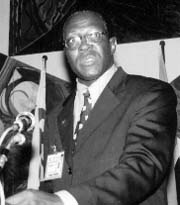
The President of the African Development Bank Omar Kabbaj briefed the Summit on how the ADB was responding to the challenges of the evolving global environment as well as how the bank was proceeding to build partnership and dialogue with the southern African region. ...
The summit noted with satisfaction that the process of political reform in Swaziland was in progress, with the Constitutional Review Commission expected to complete its work on a new constitution within two years. The Summit welcomed the smooth transfer of power in Botswana following the retirement of Sir Ketumile Masire from the presidency of Botswana. It paid tribute to President Nelson Mandela for his wise leadership of the African National Congress as its president for many years. ... The Summit expressed concern at the civil disturbances and loss of life following the recent elections in Lesotho. It welcomed the mediation initiative led by the South African government, which resulted in the setting up of a SADC Committee of Experts to investigate the validity or otherwise of allegations that the elections were fraudulent. |
It also expressed concern at the recent developments in Angola, and strongly condemned Savimbi's belligerent non-compliance with the major provisions of the Lusaka Protocol, which commits him to full demilitarisation of his armed forces, participation in a government of national unity and a national defence force.
The Summit urged Member States to ensure tight regulation and improved control of airports and airspace to ensure effective implementation of the UN sanctions against UNITA. It undertook to adopt the necessary measures to ensure compliance with decisions made by member states through SADC, OAU and UN resolutions on this matter. The Summit further called on the international community, particularly countries and leaders who have an influence on Savimbi to persuade the rebel movement to rededicate itself to the path of peace and reconstruction in Angola as a matter of urgency. ... It welcomed initiatives by SADC intended to assist in the restoration of peace, security and stability in the DRC. The summit expressed its heartfelt condolences to the Governments and peoples of Tanzania, Kenya, South Africa and the United States over the hundreds of lives which were lost as a result of the bombing of American Embassies in Dar es Salaam, Nairobi, as well as a restaurant in Cape Town in August 1998. The Summit expressed its strongest reservations regarding the US government's unilateral act in the missile bombing of a presumed "terrorist target" in Sudan. It emphasised the need to demonstrate confidence in continental and international fora such as the OAU and UN Security Council in seeking collective action to combat common threats to international peace and security. ... The Summit noted with regret that the Great Lakes region continued to pose serious security and refugees problems to the regions of eastern, central and southern Africa. It called on the international community to provide the necessary diplomatic and logistical support towards efforts by regional leaders to start a genuine process of negotiations in the Great Lakes, including Burundi and Rwanda, leading to a new political dispensation guaranteeing liberty, democracy and security for all citizens. The Summit expressed satisfaction that member states have continued to implement sound economic policies that augur well for long-term sustainable development citing continuing positive annual growth rates since the post 1995 period. The Summit observed that the 1997 average GDP growth rate stood at 2.2 percent while budget deficits and inflation rates had decreased dramatically to six and 10 percent respectively during the same period. It appealed to both local and foreign investors to fully take advantage of the changing economic situation to further increase intra-regional trade beyond the current 20 percent of total SADC trade. The Summit undertook to further enhance efforts to coordinate and rationalise their programmes of economic reconstruction, to give more impetus to the region's emerging market of over 190 million people with a combined GDP of more than US$160 billion. The Summit expressed concern over the unfavourable weather conditions which prevailed during the 1997/98 cropping season characterised by erratic and below normal rainfall in some countries and excessive rains leading to disruptive floods in others, resulting in a projected overall cereal deficit of 510 000 tonnes. ... The Summit undertook to ensure, through the relevant institutions, the monitoring of strategic food reserves, and the determination and implementation of appropriate contingency plans to address the projected cereal deficits particularly in wheat, sorghum and millet, to avoid suffering by vulnerable groups. The Summit commended Council for finalising the major task of establishing policy guidelines that will facilitate the speedy completion of the transformation of SADC into a dynamic development community, through the Review and Rationalisation of the SADC Programme of Action exercise. The summit endorsed the decision to reorient the role of SADC to include a focus upon policy formulation, coordination and harmonisation, the involvement of the private sector and other stakeholders in community building. The summit reaffirmed the necessity of continuing with the system of sectoral coordination by member states, and the rationalisation of sectors where appropriate. ... |
The Summit welcomed the creation of a new Sector of Legal Affairs, which would deal, among other, with cooperation in the administration of justice, harmonisation of member states legal and judicial systems, the provision of critical legal support services to other SADC sectors, as well as the SADC Tribunal.
The Summit expressed satisfaction that protocols on Transport, Communication and Meteorology, and Energy, had recently acquired the required two-thirds majority ratification by member states to come into force.
The Summit expressed disappointment that so far four countries (Botswana, Mauritius, Tanzania and Zimbabwe) have ratified the Trade Protocol, which is the key to successful regional integration and economic development in southern Africa. It warned that the Organisation could lose its credibility unless member states moved with speed to address problems impeding ratification of the Trade Protocol. The Summit welcomed the decision to convene a SADC Trade Negotiating Forum in October, and an extra-ordinary meeting of Ministers of Trade and Industry before the end of 1998, to finalise outstanding matters on the Trade Protocol. A new Protocol on Tourism was signed. Among other things, the protocol aims to ensure balanced and complementary development of the tourism industry in the SADC region through collective efforts. The Summit signed an Addendum to the 1997 SADC Declaration on Gender and Development: Prevention and Eradication of Violence against Women and Children. ... The Summit noted with appreciation, measures that member states were taking to combat corruption in the region. It agreed that corruption was an insidious evil practice that would sabotage the region's socio-economic development if it was not uprooted and eradicated completely. It therefore commended member states for establishing autonomous and accountable anti-corruption agencies. The Summit expressed concern at the speed at which HIV/AIDS was spreading to all sectors of the population, particularly the youth and the most economically active groups. It expressed an urgent need for SADC and Member States to review and revamp their strategies and programmes for fighting HIV/AIDS to ensure that socio-economic gains made over the years are not drastically reversed especially in areas like lower infant mortality, increased literacy, life expectancy and skills acquisition. The Summit further called for closer cooperation between Governments, NGOs, the private sector and other stakeholders in the fight against the HIVAIDS pandemic. The Summit reflected on possible "worst-case" scenario problems likely to result from the Year 2000 Computer Problem (Y2K) such as disruption or collapse of utilities, transport and communication networks including financial, social services, food supply and defence systems. It urged member states to treat the Y2K problem as an emergency and to allocate resources to initiatives seeking solutions on a top priority basis. The Summit expressed satisfaction at the progress being made in the implementation of the African Economic Community, following the signing of the Protocol on the Relations between the African Economic Community and Regional Economic Communities on 25th February 1998, in Addis Ababa, Ethiopia. It reaffirmed the 1995 decision that all the activities and policies of SADC should be carried out in the context of achieving the objectives of the African Economic Community. The Summit committed SADC, as a building bloc, "to play a catalytic and strategic role in the process of establishing the African Economic Community. A decision was made to reduce the tenure of office of the Chairperson of SADC from three years to one year with effect from 1999, in order to facilitate greater participation by all member states in the leadership of the organisation at the highest level. |